For a hundred years the Barnes Memorial Hall, on the Heyford Road, has been where Somerton gets together. Whist drives and dances, the produce show, parish meetings, polling day, the fete and the winter fair: if it happened in the village, it probably happened here.
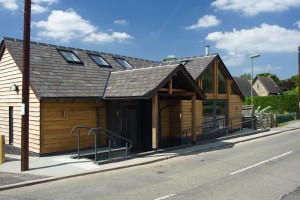
A gift in memory of the rector
The Reverend George Edward Barnes was Rector of Somerton for 48 years, from 1875 until he died on 23 June 1923. He had worked for a hall for the village, but it was his widow who gave it. On 23 April 1924, St George's Day, the Dowager Countess of Jersey opened the Barnes Memorial Hall, dedicated to "the well loved and respected Rector" who had spent so long in "his beloved village". Mrs Barnes's dedication plaque still hangs on the wall today.
We do not yet know who designed or built the 1924 hall, what it cost, or exactly how the land was found. One possible clue is in the sale of the Somerton estate in 1919, which included "an excellent building site, now let as allotment gardens", but we have not been able to show that this was the plot.
Strict rules
Mrs Barnes's gift came with conditions. The hall was to be a "Reading Room or Club for the use of all men and women of the age of 15 years or upwards" living in Somerton, "of good character". It was not to be used for political or sectarian purposes, nor for any religion other than the Church of England, and "on no account" for meetings of the Women's Institute. No tobacco, drugs or drink were to be sold, there was to be no gambling or betting, and the hall was to stay shut on Sundays.
The idea of a village reading room was not new. The 1910 valuation survey already lists a reading room in Somerton, on the Earl of Jersey's land, though we do not know where it stood.
The heart of village life
Whatever the rules, the hall soon became the centre of things. Villagers remember the whist drives and dances, and it was said that the hall floor was "the best dance floor in North Oxfordshire". A children's clinic was held there, and Mrs Waddup, who kept the shop, would stand outside in her big white apron, beckoning the children in for a spoonful of cod liver oil and a sugar lump.
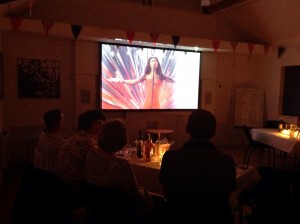
During the Second World War the Village Produce Association ran instructional talks and film shows in the hall, and in June 1942 set up its first stall on the verge opposite. The annual produce show, which began in 1943, is still held at the hall each September, alongside the events of the Social Club.
Read more: A Night Out in Somerton: the Social Club, which has met in the hall since the 1970s.
The hall has also hosted the Somerton Hour talks, SWIG's monthly meetings and the Teatime Club: see Talks, Groups and the Youth Club.
Today the hall is also the village polling station, and hosts meetings, talks, groups, a summer fete and a winter fair.
Rebuilding, 2008 to 2010
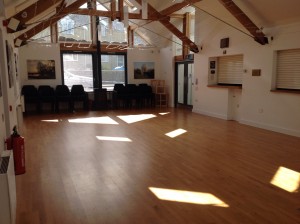
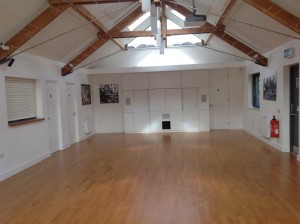
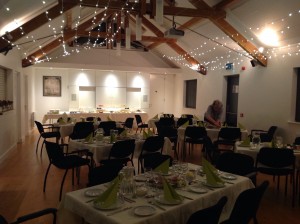
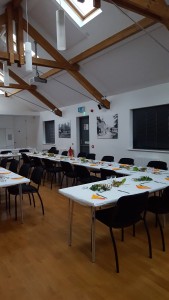
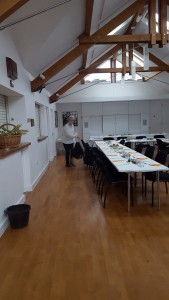
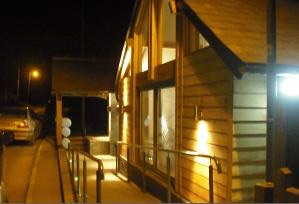
By the 2000s the old hall had subsidence and a leaking roof, and repairing it would have cost a great deal. In December 2008 the Big Lottery Fund awarded the trustees £311,000 towards a replacement. The Parish Council appointed Hayward Smart Architects, who designed a timber-framed hall on the same sloping site. Its gabled roof echoes the old building, and inside the main hall is open to the roof, with oak trusses. A further grant paid for audio-visual equipment, so the hall can now show films again. The new hall opened on 17 April 2010.
Hiring the hall
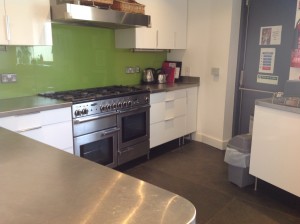
The hall is run by the Barnes Memorial Hall Trust, a registered charity. For bookings, contact Gill and Nick Rowe: gillnickrowe@gmail.com, 01869 345472.
Sources: "Barnes Memorial Hall: 100 years of history", Valley News, December 2024, p. 18; Westminster School Archive, Barnes, George Edward, 1847-1923; Bicester Local History Society (which says Barnes retired in 1923; he in fact died in office); Hayward Smart Architects; National Lottery Community Fund; Charity Commission register; 1910 valuation survey (Oxfordshire History Centre DV/X/73); 1919 Somerton estate sale catalogue; School Days and Village Produce Association pages.